Updated 2026 · 9 min · by NebulaTrip local experts
Wuyuan is in Jiangxi today; Xidi and Hongcun are in Yi County, Anhui. They share a wider Huizhou cultural and architectural history, but they are not one scenic area and do not share one World Heritage ticket. The practical trip is two or three days in selected Wuyuan villages, with a separate Anhui extension only if another transfer is worth it. Spring rapeseed can transform Jiangling and Huangling, but fields are crops and the bloom moves every year. Build a village route that still works when flowers are early, rain hides the terraces or a famous lane is busy.
Wuyuan railway station makes the Jiangxi side accessible from Huangshan, Jingdezhen and larger eastern cities, but the villages remain spread across the county. A train ticket to Wuyuan is not transport to Jiangling, Likeng, Wangkou, Sixi Yancun or Huangling. Check the current village bus or tourist shuttle and its return before relying on it; otherwise prearrange a driver for one geographic cluster.
Hongcun and Xidi lie across the provincial border in Anhui and are the UNESCO-listed “Ancient Villages in Southern Anhui.” That designation does not include Wuyuan. A cross-province plan needs a separate vehicle, admission and accommodation decision. Do not attempt Wuyuan Station, two Jiangxi villages, both Anhui World Heritage villages and Huangshan in one sightseeing day.
For two nights, stay on one Wuyuan corridor. With four or five nights, a sensible shape is Wuyuan first, then one Anhui village and Huangshan or Tunxi. Confirm exact station names and road pickup; straight-line map distance says little about rural transfer time.
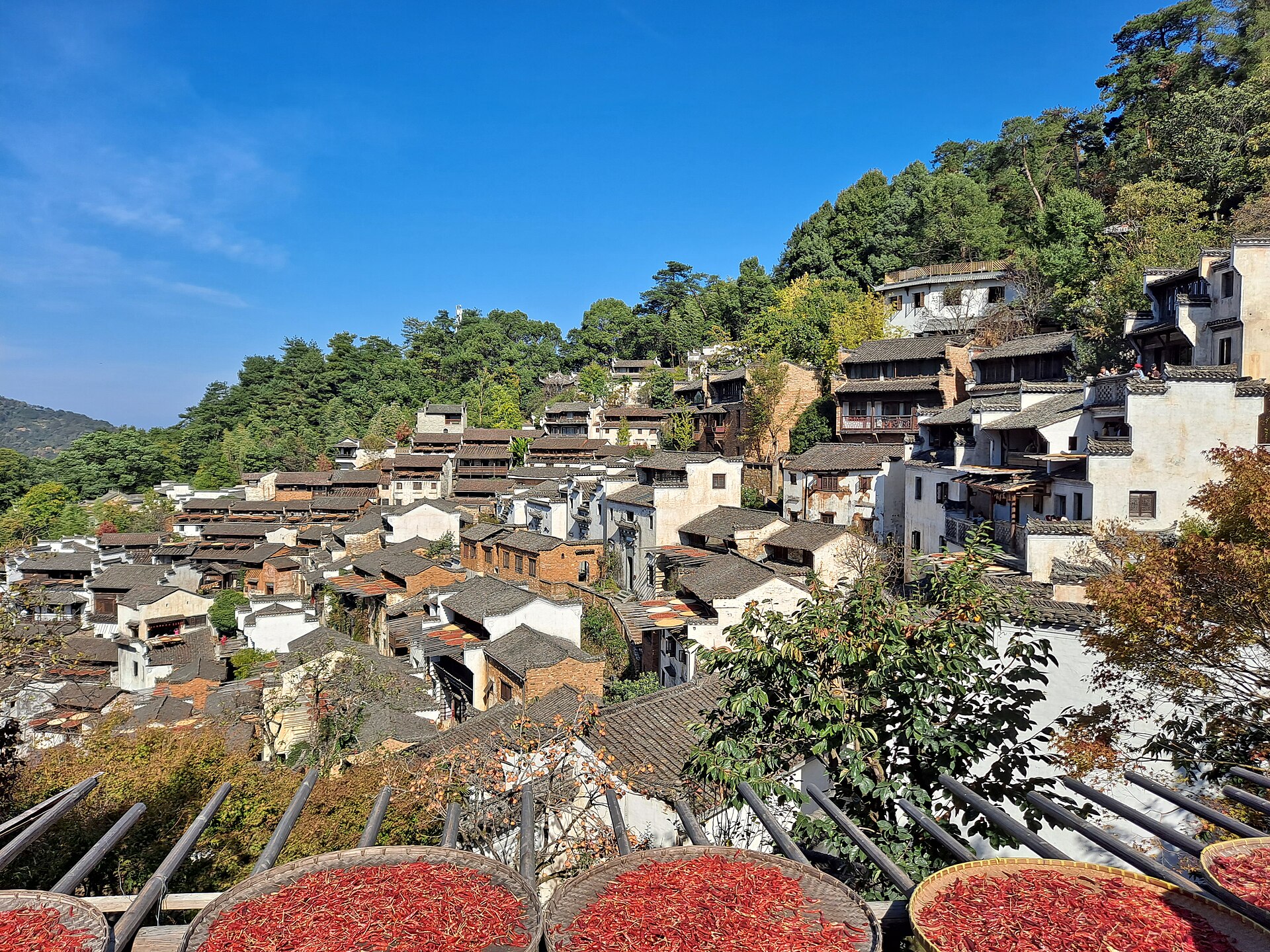
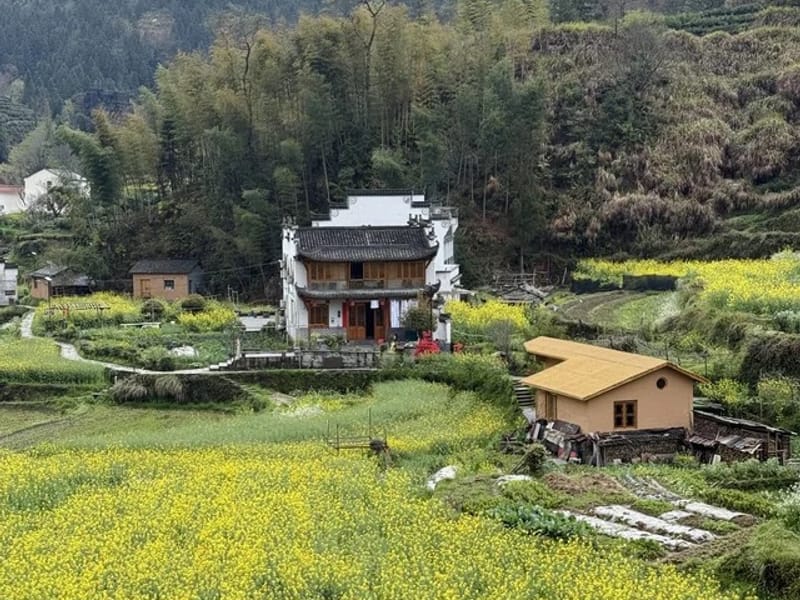
Jiangling is primarily a terraced agricultural landscape and spring-flower viewpoint. Huangling combines a hillside village setting with a developed tourism system, cableway and staged viewing infrastructure. Likeng and Wangkou offer waterways, lanes and built heritage in different scales; Sixi Yancun and Jiangwan support other architecture or history interests. Select two in a day only when the road sequence is coherent.
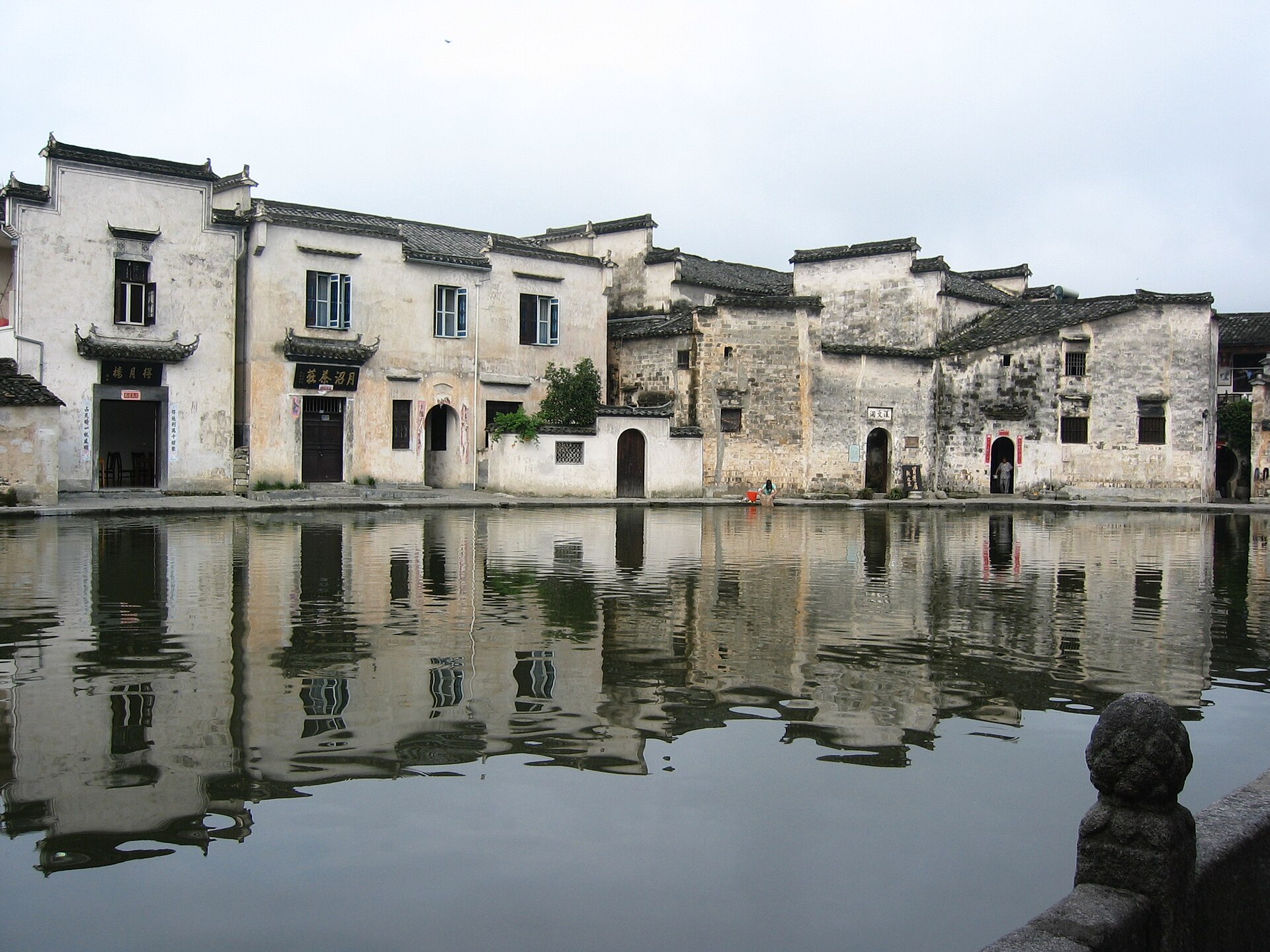
White walls, dark tiles and horse-head gables indicate a regional architectural language, not a guarantee that every visible house is an untouched Ming or Qing original. Villages include restored buildings, new services, private homes and commercial interiors. Use a posted label or documented source before giving one courtyard a date, owner or clan story.
A ticketed village is still lived space. Stay on public lanes, do not push open residential doors, and ask before photographing people or working interiors. A quiet side lane is not automatically “more authentic” than a busy main street; it may simply be someone's doorstep.
In 2026, official provincial reporting documented broad bloom around late March and early April in Wuyuan, including Jiangling and Huangling. That confirms what happened this year, not a permanent peak week. Temperature, rain, planting and field management move the sequence. Check current images and the county or scenic-area notice shortly before travel, then keep a village-and-architecture fallback.
Jiangling matters when the source and viewpoint genuinely show the named terraces. Do not substitute a generic yellow field, another province or a drone image whose location cannot be proven. Rain can soften visibility, while a bright day can create hard contrast. Neither condition guarantees the “ink painting” photograph sold in promotions.
Huangling's shaiqiu displays relate to drying crops but are also a major managed tourism image. The colours and materials change, and an advertised display does not mean every rooftop belongs to a private household following an unchanged routine. Describe what is visible, not an invented harvest story.
Do not assume one current pass includes every Wuyuan attraction. Ask the official seller to list the villages, validity and transport included, and compare that list with the actual route. A cableway at Huangling, a village entrance elsewhere and a cross-province transfer to Hongcun are separate products unless the contract says otherwise. Bring the original passport used for any real-name order.
Sleeping in a restored house can add early and late walking time, but verify the exact village and road access. “Historic homestay” does not prove the age of every beam. Ask about private bathroom, moisture, heating or air-conditioning, sound, stairs, breakfast and how luggage reaches the room. Spring weekends can make cancellation terms more important than decorative furniture.
Order food by ingredients and current kitchen practice. Bamboo shoots, river fish, preserved foods, tofu, tea and pork dishes vary by village and season. Ask about meat stock, bones, chilli and allergens. A host meal can be good hospitality without being evidence that one recipe represents all Huizhou cuisine.
Arrive early because it gives time, not because mist or an empty bridge is guaranteed. Use public viewpoints and marked paths; do not enter a field, move a resident's drying crops or fly a drone without current permission and all applicable rules. Wet stone lanes require useful shoes, and a rain cover protects equipment without turning weather into a failure.
A knowledgeable guide can distinguish Jiangxi Wuyuan from Anhui Yi County, connect merchant and clan history to a documented building, and choose a road sequence that wastes less time. They should also admit when a house date, carving story or flower peak is uncertain. A driver who only opens doors is a different service; compare the written scope.
The strongest trip is not the one that labels every whitewashed wall “ancient Huizhou.” It is the one that names the village correctly, separates protected heritage from private life and notices how farming, restoration and tourism now share the same landscape.
Private & flexible · English-speaking guide · real-time online booking.
Tell our local experts what you'd like to see and we'll design a private, tailor-made itinerary with English-speaking guides — free plan & quote, no obligation.