Updated 2026 · 10 min · by NebulaTrip local experts
For a first trip, 10 to 14 full days on the ground is the most useful answer. Seven days can work, but it is better for two hubs than for a breathless national “highlights” sweep. Eighteen to 21 days lets you add a genuinely different region without living out of a suitcase. Count nights, arrival recovery and station transfers—not just coloured lines on a rail map. China's network is fast; the country is still continental in scale, and a train that takes several hours also has security, boarding and two city transfers attached to it.
Write down three numbers: nights in China, full sightseeing days and hotel changes. A ten-night trip arriving late and leaving early may contain only eight usable days. A one-night stop usually buys less than a full day once check-out, the trip to a station or airport, security, arrival and the next hotel are included.
Then choose the trip's purpose. For imperial history plus a modern city, Beijing–Xi'an–Shanghai is coherent. For scenery and food, Chengdu with western Sichuan or Guilin with Yangshuo may be stronger than forcing all three classic cities. For a family with small children, travellers who need rest days, or anyone crossing many time zones, subtract one stop before adding attractions.
There is no universal rule that every long rail leg should become a flight. High-speed rail normally reaches central-city stations and offers a predictable onboard experience; flights can save time on very long gaps but add airport distance and disruption risk. Compare door to door. An overnight train saves a hotel night only if the available class, sleep quality and arrival time suit your group.
The better seven-day shape is two bases. Beijing for four nights plus Xi'an for three gives the Forbidden City, a Great Wall day, one flexible Beijing day and a proper Terracotta Warriors day. Beijing plus Shanghai exchanges the archaeological focus for neighbourhoods, architecture and an easier modern-city finish. Shanghai plus nearby Jiangnan can work for travellers who prefer shorter transfers.
A Beijing–Xi'an–Shanghai trio is possible, but label it honestly: a fast sampler. With seven full days, a workable allocation is three Beijing days, two Xi'an days and two Shanghai days, plus two intercity moves. That means early departures, few weather buffers and no extra landscape region. If “seven days” includes international arrival and departure, the trio becomes much thinner; cut one city.
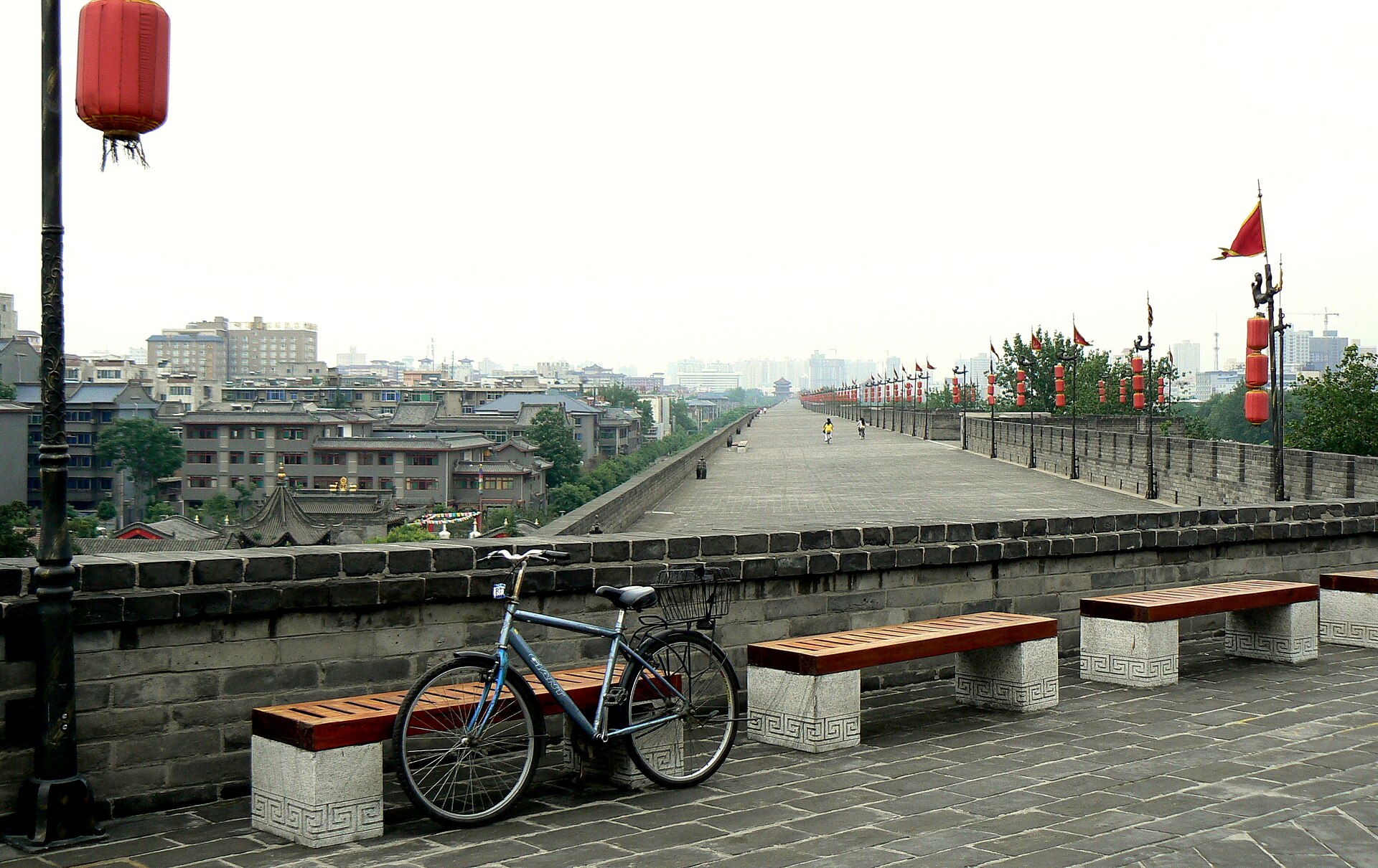
Do not justify Xi'an as a stopover that costs nothing. Its main museum complex is outside the city, while Beijing and Shanghai stations are also large environments. The three-city route is worthwhile when those specific headline sights outrank a relaxed pace—not because a booking tool draws a neat line between them.
Ten days supports the classic three cities with breathing room, or two classic cities plus one landscape base. Twelve to 14 days is where the route becomes satisfying: keep Beijing, Xi'an and Shanghai, then add one contrast such as Chengdu, Guilin–Yangshuo or Zhangjiajie.
Choose that fourth region by experience, not by fame. Chengdu adds pandas, teahouses and Sichuan food; do not assume it automatically includes both Leshan and Mount Emei without another long day. Guilin–Yangshuo gives a one-way Li River journey and rural karst time, but river operations need a weather fallback. Zhangjiajie rewards walkers who can handle lifts, buses, queues and shifting visibility; it is not a single viewpoint beside the station.

A humane 14-day outline could be Beijing four nights, Xi'an three, one selected scenic region three or four, and Shanghai three. Exact transport may change that order. Avoid a chain of Beijing–Xi'an–Chengdu–Guilin–Zhangjiajie–Shanghai simply because each pin is famous. Six hotels in two weeks makes every disruption contagious and leaves little space to experience the region you added.
Three weeks should not be a longer version of the same race. Use the extra time to create two regional chapters. One model is Beijing and Xi'an, then a western chapter around Chengdu and a carefully chosen part of Sichuan, finishing in Shanghai. Another is Beijing–Xi'an followed by Yunnan, where Dali, Lijiang and one mountain area need enough nights to cope with road travel and elevation. A southern route can pair Shanghai or Hong Kong with Guilin–Yangshuo and Guizhou.

Tibet is not a casual three-night insert. Foreign travellers need the current permit and organised-travel arrangements, and an itinerary must allow for altitude rather than using the train as a guaranteed acclimatisation device. Remote trekking and road-trip regions also require weather buffers. If one of those is the dream, reduce the eastern-city count.
Protect at least one unassigned day near a weather-sensitive region or before the international departure. “Buffer” does not mean a blank day will be wasted; it can become a neighbourhood walk, laundry, a museum or a slower meal if everything runs smoothly. It is what prevents one closure from destroying the rest of the route.
Reserve the framework before micromanaging restaurants. China's official 12306 railway guidance currently says tickets generally go on sale 15 days before departure, and foreign passengers can book with eligible passport details. That window is not a reason to wait on everything else: secure scarce attractions and hotels under their own current rules, then be ready when each train opens. Names and document numbers must match, and the original registered document may be needed.
Check the State Council's published holiday calendar for your exact year. Spring Festival, National Day and other statutory-holiday periods alter demand, but old articles often repeat dates from a previous year. Add time for station security and use the precise station name; cities can have several terminals far apart. Avoid a non-refundable flight immediately after a weather-dependent cruise, mountain road or trek.
Finally, set a deletion rule before travel. If a ticket is unavailable, weather closes a route or someone is exhausted, remove the lowest-priority stop instead of compressing every meal and transfer. Ten well-paced days are more valuable than fourteen days designed as proof that you crossed the most provinces.
Book the 8-Day Beijing–Xi'an–Shanghai Private Tour with real-time availability.
See tour & book Plan with AIPrivate & flexible · English-speaking guide · real-time online booking.





Tell our local experts what you'd like to see and we'll design a private, tailor-made itinerary with English-speaking guides — free plan & quote, no obligation.